Sulphuric Acid Dilution System
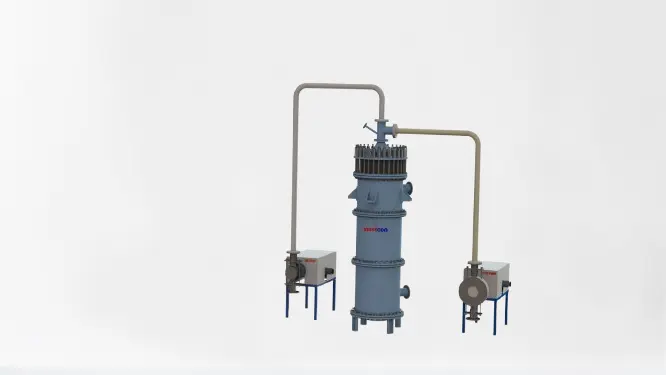
Sulphuric Acid Dilution System Capacity: 1000–10000 L/h. Dilution range: 98% to 50% H₂SO₄. Ideal for Battery manufacturing. IS 13006 compliant. Get a quote.
Manual acid dilution requires 5–6 workers per batch and 30–40 hours of continuous monitoring — a labour-intensive, hazard-prone process that introduces ±3–5% output variance. Indeecon's PLC-automated system manages the same process with one operator and 0.5 hours of attention per batch, delivering ±0.5% consistency and 100% elimination of direct chemical exposure. Designed for battery manufacturing plants and specialty chemical producers who require reliable, repeatable acid concentration.
Key Specifications
- Capacity: 1000–10000 L/h (customisable)
- Dilution range: 98% to 50% H₂SO₄
- Output temperature: 45°C–55°C
- PLC + HMI automatic operation
- Built-in alarms & emergency shutdown
Key Features
- PLC + HMI Fully Automated Control: Operator configures target concentration and flow rate; system executes and monitors without manual intervention
- Closed-Loop Concentration Monitoring: Continuous inline measurement with automatic correction — output consistency improves from ±3–5% (manual) to ±0.5%
- 83% Reduction in Labour Requirement: One trained operator manages the full system vs. five to six workers required for equivalent manual batch throughput
- 100% Elimination of Direct Chemical Exposure: Fully enclosed process — no manual acid contact, no open-vessel handling, no manual temperature monitoring
- ~87% Reduction in Processing Time: 4–6 hours per batch vs. 30–40 hours with manual processes — enables higher throughput with the same staffing
- Titanium PHE Heat Exchanger: Handles exothermic dilution heat with laser-welded Grade 1 titanium — immune to 30–40% sulphuric acid
- Multi-Layer Safety Interlocks: Over-temperature shutdown, flow monitoring, leak detection, and emergency stop — all PLC-managed with alarm logging
- Capacity: 1,000–10,000 L/h, customisable to facility requirements
- Output Range: 98% H₂SO₄ → 28–36% working concentration (battery plant standard), or per-process specification
Compliance Standards
- IS 13006 (Refrigerating Equipment Safety — for integrated cooling systems)
- ISO 45001 (Occupational Health and Safety Management — system design supports compliance)
- OSHA 29 CFR 1910.119 (Process Safety Management alignment)
- India Factories Act 1948 / OSH Code 2020 (chemical exposure elimination supports compliance)
Applications
- Battery Manufacturing: Lead-acid battery plant acid preparation — consistent electrolyte concentration directly impacts battery performance and cycle life
- Chemical Processing: Inline dilution for process streams requiring precise H₂SO₄ concentration at scale
- Metal Surface Treatment: Acid pickling and surface activation lines requiring controlled concentration and temperature
- Electroplating: Sulphuric acid bath preparation with tight concentration tolerances
- Water Treatment: Sulphuric acid dosing for pH control and neutralisation systems
Safety Features
- High / Low temperature alarms with audio-visual indication
- Overpressure and overload protection
- Emergency shutdown system with interlock logic
Optional Features
- SS316 / PP / FRP piping options based on plant standards
- Remote monitoring (SCADA / IoT-ready integration)
- Inline filtration and buffer tank configuration
- Custom skid mounting and piping layout support
How It Works
- Acid and water feed control via PLC-regulated dosing
- Controlled mixing to achieve target concentration
- Heat removal through integrated cooler / heat exchanger
- Output stabilisation within the required temperature band
- Safe discharge with alarms, protections and emergency shutdown logic
Datasheets & Resources
- Dilution Capacity
- Dilution Range
- Output Temperature
- Pumps
- Heat Exchanger
- Power Supply
- Phase
Frequently Asked Questions
What's the difference between water and acid chillers?
Water chillers use stainless steel heat exchangers for neutral fluids. Acid chillers use titanium PHE for corrosive environments (30-40% H2SO4). Acid models include non-ferrous pumps to prevent metal degradation.
Can I upgrade a water chiller to handle acid later?
No. Acid-handling capability requires titanium fabrication from design. Retrofit is not economical. Choose the correct model at purchase.
What refrigerant do you use?
We use eco-friendly R-404A and R-134a, compliant with ASHRAE and Indian environmental standards. No CFCs or HCFCs.
How often should I service my chiller?
Annual preventive maintenance is recommended. Quarterly checks for high-usage environments. We provide service contracts with spare parts availability.
Get a Custom Quote for Your Industrial Chiller System
Contact our cooling specialists for free technical consultation