Deep Freezer
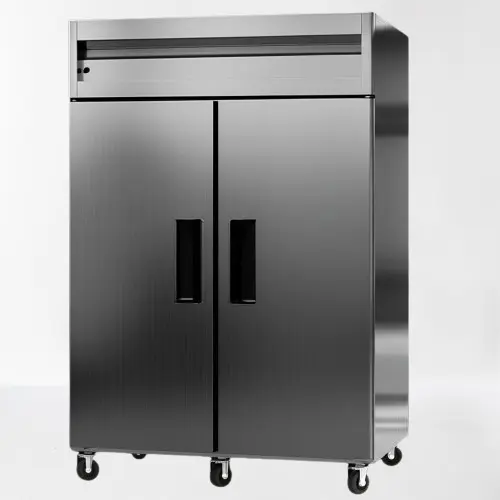
Deep Freezer -20°C to -86°C. Capacity range: 100L to 750L. Ideal for Clinical and research. ISO 5833 compliant. Get a quote.
Key Specifications
- Temperature range: -20°C to -86°C
- Capacity range: 100L to 750L
- Stable low temperature storage performance
- Industrial-grade refrigeration for long life
- Designed for laboratory and industrial use
Key Features
- Ultra-low temperature: -40°C ±2°C with minimal fluctuation across 200L+ storage volume
- Cascade cooling system maintains -40°C even during ambient temperatures up to 35°C
- Redundant temperature sensors with independent alarm circuits ensure 24/7 monitoring
- Heavy-duty insulation provides 12+ hour holdover time during power loss
- Drawers and shelving accommodate sample vials, culture plates, and tissue containers
- Stainless steel exterior resists cleanroom sanitization agents and laboratory corrosion
- Low-vibration compressor design prevents thermal shock to sensitive biological materials
- UPS-compatible 230V single-phase power consumption <3 kW
- Optional data logging (USB or Ethernet) enables temperature trend monitoring and compliance audits
- Audible/visual alarms alert staff to temperature deviation, door-open, or power failure conditions
Compliance Standards
- ISO 5833 biological specimen preservation and archival
- WHO guidelines for vaccine storage and cold-chain management
- IEC 61010-1 laboratory equipment electrical safety and performance
- ICH Q1F stability testing environment specifications
Applications
- Clinical and Research Biobanks: Long-term archival of blood, serum, plasma, and tissue samples
- Vaccine Manufacturing and Distribution: Cold-chain storage meeting WHO and CDC specifications for vaccine potency preservation
- Pharmaceutical Development: Sample archival for clinical trials and stability studies
- IVF and Reproductive Medicine: Embryo and sperm cryopreservation with strict temperature control
- Microbiology and Culture Preservation: Microbial strain banking for reference collections and industrial fermentation
- Academic Research: Long-term storage of genomic DNA, RNA, and protein samples for multi-year investigations
Safety Features
- Compressor protection and overload safety controls
- Temperature alarm protection (model dependent)
- Electrical safety protections and safe shutdown logic
Optional Features
- Data logging and temperature recording options
- Remote monitoring and alarm outputs
- Custom internal racks and storage configuration
- Backup power and redundancy options (as required)
How It Works
- Load materials into the freezer with proper spacing
- Set target storage temperature on the controller
- Refrigeration system maintains stable sub-zero conditions
- Safety alarms monitor performance during operation
- Store samples reliably for long-duration requirements
Datasheets & Resources
- Temperature Range
- Capacity Range
- Refrigerant
Frequently Asked Questions
How is -40°C storage different from -20°C or -70°C ultra-low freezers?
-40°C is the sweet spot for most biobanking and vaccine storage: cold enough to dramatically slow degradation (half-life extended by ~10–15 years vs. -20°C) yet more energy-efficient than -70°C ultra-low freezers. -70°C is reserved for multi-decade archival (50+ years). For 5–10 year storage, -40°C is ideal.
Will power loss compromise my samples?
The 12+ hour holdover time gives you a buffer. In a typical lab with emergency generator backup, you have ample time to restore power. For critical samples, some institutions add redundant freezers or integrate with facility-wide power management systems.
Can I store vaccines in this freezer?
Yes. Indeecon freezers meet WHO specifications for vaccine cold-chain storage. Most vaccines are stored at 2–8°C or -20°C, but some experimental and next-generation vaccines require -40°C. Consult your vaccine manufacturer's stability data to confirm compatibility.
How often should I defrost?
Modern frost-free designs defrost automatically every 12 hours for 20 minutes during low-demand periods. Manual defrost is also available. Moisture drains to the floor or a collection pan—ensure adequate drainage in your facility.
What temperature monitoring and documentation does this support?
Indeecon offers USB data loggers (100+ readings) or Ethernet-connected versions for continuous remote monitoring. NABL-traceable calibration of internal temperature sensors ensures audit compliance. Export data to Excel or integrate with your LIMS for GxP traceability.