Industrial Muffle Furnace
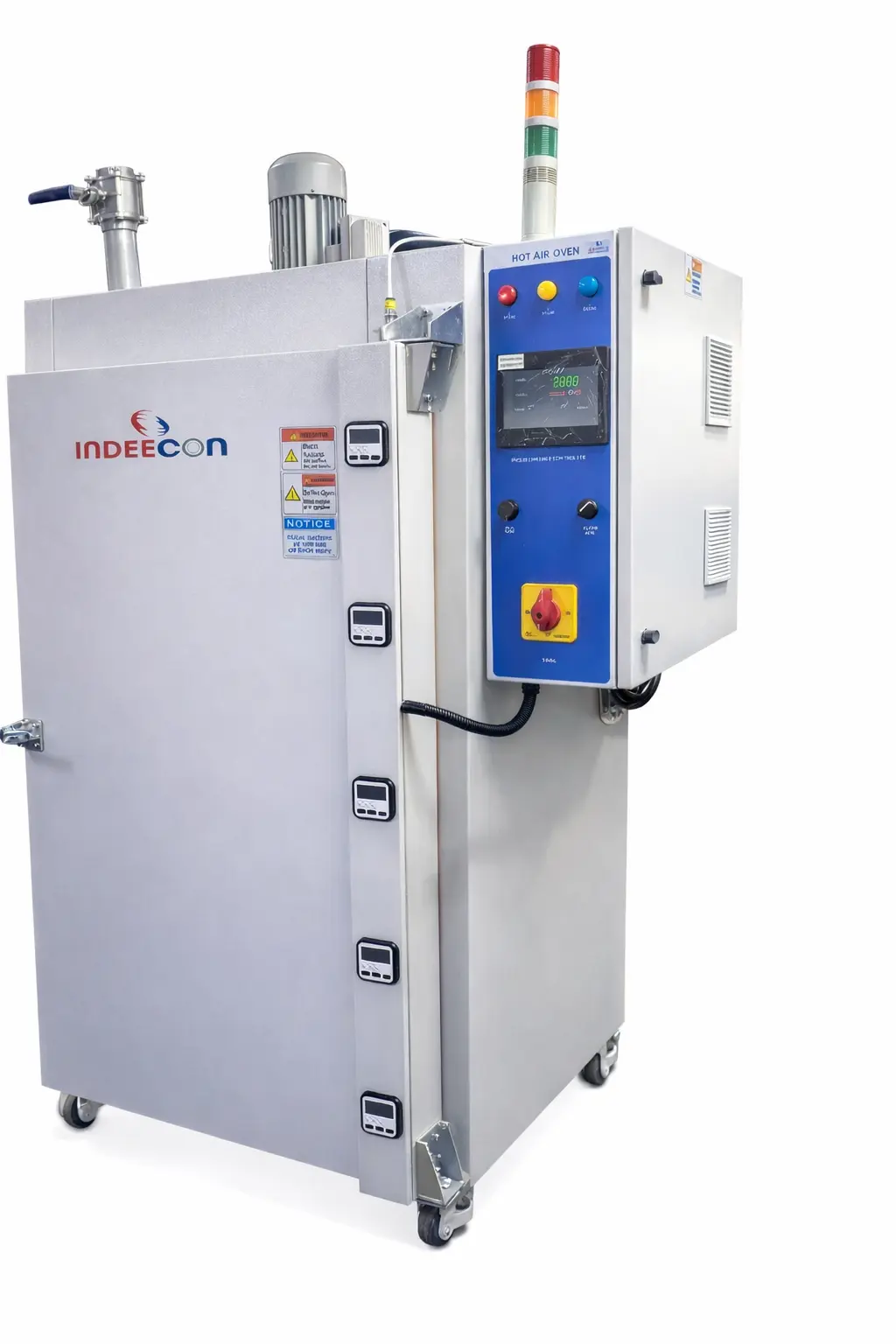
Industrial Muffle Furnace High capacity for industrial production. Robust construction for continuous heavy duty use. Ideal for Coal & petroleum.
A muffle furnace is a specialized laboratory oven that heats materials in an isolated chamber (muffle) to extremely high temperatures while preventing direct contact with heating elements or combustion gases. This isolation ensures precise, repeatable thermal processing for ashing, material testing, and sample preparation. Muffle furnaces are essential for:
Key Specifications
- High capacity for industrial production
- Robust construction for continuous heavy duty use
- High-density multi-layer refractory insulation
- Precise temperature control for large volumes
- Designed for sintering, annealing and heat treatment
Key Features
- Three Temperature Tiers: 1200°C (Kanthal, ±3°C), 1450°C (SiC, ±5°C), 1800°C (MoSi2, ±5°C) — matched heating element technology for each application
- Multi-Layer Insulation: High-purity alumina fiber hot face combined with low-thermal-mass ceramic fiber — rapid temperature recovery and minimal cool-down between batches
- MoSi2 Element Protection: Forms a protective quartz oxide layer at high temperatures, extending element lifespan and preventing thermal runaway at 1800°C
- Precision Gas Venting: Integrated exhaust chimney (top or rear-mounted) enables proper LOI testing and ash collection without air turbulence
- NABL Temperature Mapping: Every unit undergoes 5–9 point temperature distribution mapping — certificate issued with delivery
- Door Safety Interlock: Automatically cuts power when opened, preventing accidental contact with ultra-hot surfaces
- Volume Options: 5L, 10L, 20L, 25L, 30L, 50L — matched to temperature series capability
- Thermocouple Types: Type K (1200°C series), Type R/S (1450°C series), Type B (1800°C series)
Compliance Standards
- ISO 1171 — Coal and petroleum ashing procedure; ash content determination
- ASTM D482 — Ash content analysis by thermogravimetry
- AMS2750 — Pyrometry requirements for metallurgical heat treatment and temperature uniformity mapping
- NABL Calibration — 5–9 point temperature distribution mapping with traceability documentation
Applications
- Coal & Petroleum Testing: ISO 1171 ash content determination and loss-on-ignition (LOI) analysis
- Ceramic & Refractory Processing: High-temperature sintering and thermal stability testing of ceramic and refractory materials
- Metallurgical Heat Treatment: Stress relief, annealing, and hardening per AMS2750 pyrometry requirements
- Materials Research: Thermal stability analysis, composition verification, and thermal property characterisation
- Electronics: Component stress-relief and lead-free solder thermal cycling qualification
- Environmental Testing: Ash content measurement and material degradation analysis for environmental compliance
Safety Features
- Overtemperature controller with independent sensor
- Phase failure and electrical short circuit protections
- Heater cut-off safety switch on door opening
- Industrial grade insulation for safe outer surface temperatures
Optional Features
- PLC based control system with touchscreen HMI
- Inert gas atmosphere control (N2/Ar)
- Motorised door open/close mechanism
- Customised hearth and shelf loading arrangements
How It Works
- Load industrial parts or material into the furnace chamber
- Set the heating profile and cycle parameters on the PLC/controller
- The system executes the programmed temperature ramp and hold
- Uniform heat distribution ensures consistent material properties
- Cycle completion and controlled cooling before product removal
Datasheets & Resources
- Temperature Range
- Chamber Volume
- Insulation
Frequently Asked Questions
What is the difference between muffle furnaces at different temperature ratings?
Higher temperature models use superior heating element materials (Kanthal → SiC → MoSi2) and refractory insulation to withstand extreme thermal stress. 1800°C models include high-purity zirconia insulation and Type B thermocouples for precision.
How often should the furnace be calibrated?
NABL and ISO standards recommend annual calibration for critical applications. We provide calibration services and documentation to ensure continued compliance.
Can these furnaces be used for continuous operation?
Yes, all three series are designed for industrial-scale batch processing with minimal cool-down periods between cycles.
What safety features protect operators?
Door-safety interlocks, thermal overload protection, and integrated exhaust venting prevent accidental contact and hazardous gas accumulation.