Laboratory Oven
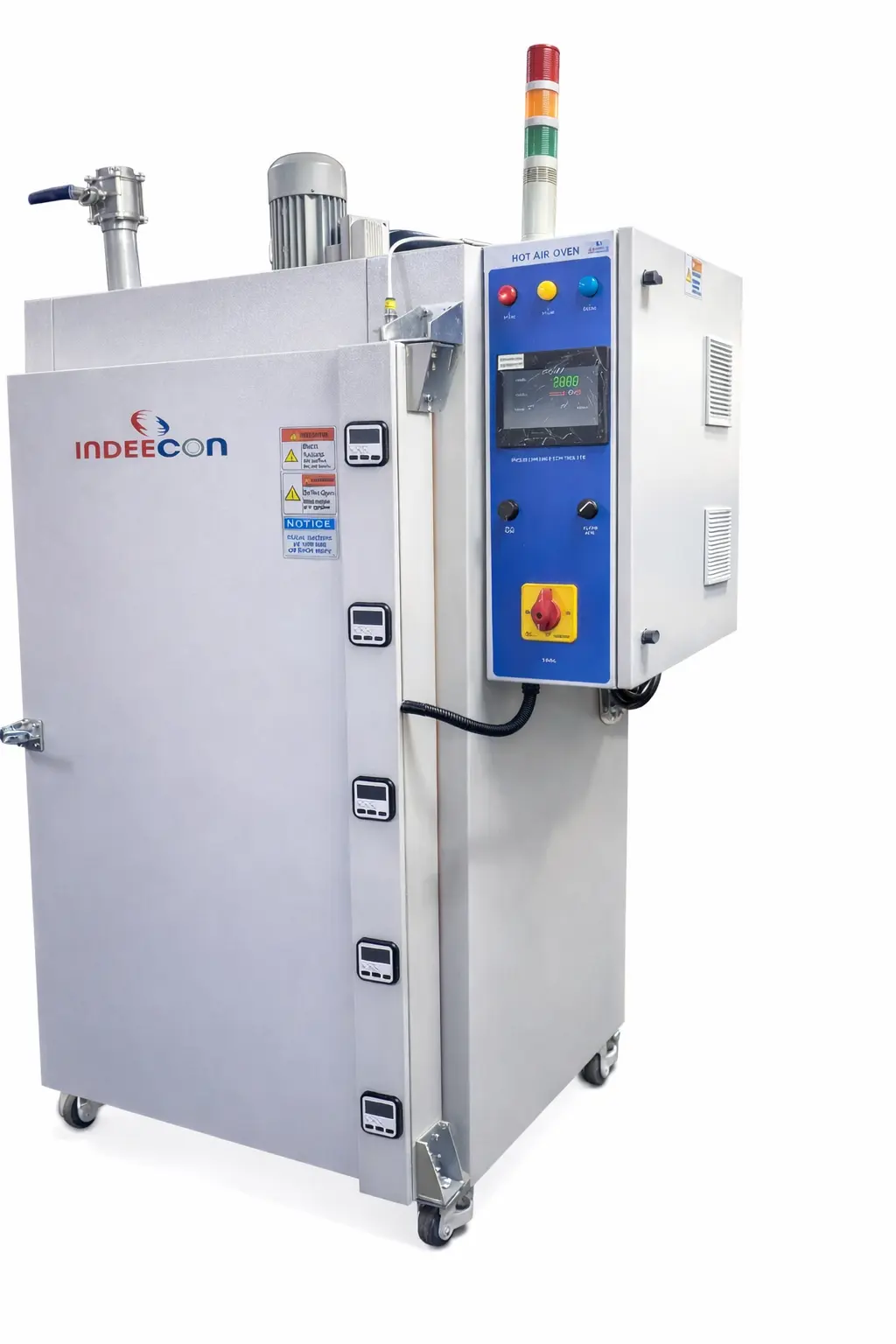
Laboratory Oven 10°C to 250°C. Forced air circulation for uniform heating. Ideal for PCB & Electronics. Get a quote.
Laboratory ovens are heated chambers designed for controlled thermal processing of materials, components, and assemblies. Unlike simple heating devices, precision laboratory ovens maintain strict temperature uniformity across all internal locations, critical for process repeatability and product quality. Indeecon offers three categories: Laboratory (benchtop, 50-150L), Industrial (floor-mounted, 250-1000L), and High-Temperature Specialist units (1000L+, up to 500°C).
Key Specifications
- Temperature range: Ambient +10°C to 250°C / 300°C
- Forced air circulation for uniform heating
- Precise digital PID temperature control
- Stainless steel interior for durability
- Multiple shelf levels for flexible loading
Key Features
- Dynamic Forced-Air Circulation: Horizontal/vertical forced-air ensures uniform temperature across all shelves — ±2°C (lab), ±5°C (industrial), ±5–10°C (high-temp to 500°C)
- Triple-Walled Thermal Barrier: SS-304 interior chamber with powder-coated exterior and ceramic/refractory insulation — minimises heat loss and stabilises external surface temperature
- Precision Air Exchange System: Adjustable fresh-air intake and exhaust vent for controlled VOC and moisture purging — essential for PCB bake-out and organic material processing
- Rapid Heating Rate: 3–6°C/min for time-critical applications — enables faster batch cycling in production environments
- Dual-Safety Integration: Digital PLC overshoot prevention combined with mechanical thermal fuse backup — safe operation even during control system failures
- Three Series: Laboratory LOV (50–150L, up to 250°C), Industrial IOV (250–1000L, up to 300°C), High-Temperature HOV (100–1000L+, up to 500°C)
- AMS2750 Compliant: Dual-safety systems and process documentation meet aerospace heat treatment quality requirements
- Optional: HEPA filtration, stainless steel cleanroom-compatible construction, pharmaceutical-grade variants
Compliance Standards
- J-STD-033 — Handling and Moisture Baking of Moisture/Reflow Sensitive SMD Devices
- AMS2750 — Aerospace heat treatment pyrometry requirements; temperature uniformity mapping
- IS 10616 — Laboratory Ovens Safety (Indian Standard)
- IEC 61010-1 — Laboratory Equipment Safety
- BEE Star Labeling — Energy efficiency rating for electrical appliances (India)
Applications
- PCB & Electronics Manufacturing: J-STD-033 moisture bake-out for SMD components before reflow; precision air exchange prevents moisture re-absorption during cooling
- Powder Coating & Paint Curing: Controlled ramp-to-soak profiles for optimal polymer cross-linking; VOC purging maintains air quality
- Aerospace & Defence Components: AMS2750-compliant heat treatment documentation; dual-safety systems meet aerospace quality requirements
- Chemical & Pharmaceutical Processing: Cleanroom-compatible models with HEPA filtration for pharmaceutical-grade material drying
- Material Aging & Accelerated Life Testing: Controlled thermal aging studies for plastics, composites, and electronic assemblies
- Ceramics & Refractories: Pre-firing drying and controlled thermal conditioning before kiln sintering
Safety Features
- Independent over-temperature safety cut-off
- Safety thermostat to prevent heater overheating
- High-temperature door gasket for safe sealing
- Electrical protection system with circuit breakers
Optional Features
- Digital timer for timed drying cycles
- Inner glass door for sample observation
- Data logging and RS485 communication
- Custom chamber sizes and additional shelving
How It Works
- Place samples or glassware on the shelves within the chamber
- Close the door and set the desired temperature on the controller
- Forced air circulation ensures uniform heat distribution
- Samples reach the target temperature and are held as required
- Open the door carefully once the process is complete
Datasheets & Resources
- Temperature Range
- Temp Accuracy
- Volume Range
Frequently Asked Questions
What's the difference between laboratory and industrial ovens?
Lab ovens (50-150L) prioritize precision uniformity (±2°C) for small batches and research. Industrial ovens (250-1000L) handle larger volumes with ±5°C uniformity. High-temp units sacrifice some uniformity for extreme temperature capability.
Can these ovens handle corrosive fumes?
Our precision air exchange system can be configured with chemical filtration (activated carbon, HEPA) for VOC/fume extraction. Specify your application for custom vent design.
How long does a temperature mapping validation take?
Factory temperature mapping (9-16 points) takes 4-6 hours. Field validation with customer's sensors can be arranged before handover.
Are these ovens suitable for pharmaceutical cleanrooms?
Yes. We offer cleanroom-compatible models with HEPA filtration, stainless steel construction, and pharmaceutical-grade materials. Specify Pharma Grade variant.
Related Guides
Continue your evaluation with the most relevant master pages, comparison guides, and technical resources for this product family.
- XLPE Curing Automation Guide — Process-engineering guide for curing automation and throughput planning.