Vacuum Oven
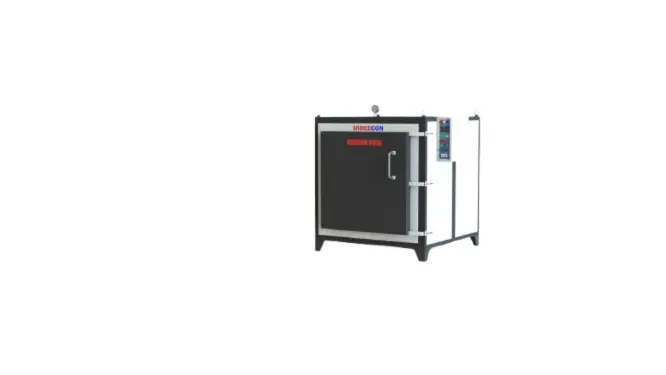
Vacuum Oven Operating vacuum range up to 10^-2 mbar. Uniform radiant heating for delicate samples. Ideal for MSL 5–6 Component. Get a quote.
A vacuum oven removes atmospheric moisture and dissolved gases from components under controlled temperature and pressure. Critical in semiconductor packaging, PCB assembly, and battery manufacturing where even trace moisture causes failure. Unlike conventional ovens, vacuum environments enable ultra-low pressure baking (as low as 0.1 mbar) without thermal degradation—ideal for MSL (Moisture Sensitivity Level) 5–6 components and wafer-level packaging.
Key Specifications
- Operating vacuum range up to 10^-2 mbar (or better)
- Uniform radiant heating for delicate samples
- Stainless steel internal chamber with polished finish
- Integrated vacuum pump with oil mist filter option
- Programmable digital controller for temp and vacuum
Key Features
- Semiconductor-Grade Electropolished Chambers: SS-316L internal surfaces with under 0.01 mbar/h leak rate — critical for sub-0.1 µm feature protection and MSL 5–6 bake-out
- Precision Vacuum Control: Digital solenoid valves and Pirani/Capacitance Manometer gauges maintain steady-state vacuum ±5% over 8-hour bake cycles
- Inert Gas Purge and Backfill: Integrated N₂/Ar ports enable oxygen-free cooling and chamber normalisation after vacuum cycles
- Optional Direct-Shelf Conduction Heating: Individual shelf heaters provide ±2°C uniformity across wafer stacks — 30% faster thermal cycle vs radiant heating
- Dual-Pane Observation Window: Tempered glass and polycarbonate shield for unobstructed part visibility — Class 100 cleanroom compatible
- Modular Tool-Free Shelf Design: Rapid removal for thorough cleaning and lot reconfiguration between product batches
- Three Performance Tiers: Laboratory (1.0 mbar, 50–200°C, 25–90L); Semiconductor (0.1 mbar, 50–250°C, 150–250L); Heavy-Duty (0.5 mbar, 50–300°C, 500–1000L+)
Compliance Standards
- J-STD-033 — Handling, Packing, and Delivery of Moisture/Reflow Sensitive Devices
- IPC-A-610E — Acceptability of Electronic Assemblies
- ISO 5 — Cleanroom Classification (Class 100 compatible chamber configurations)
- NABL — Temperature and vacuum pressure calibration with ISO/IEC 17025 traceability
Applications
- MSL 5–6 Component Bake-Out: Pre-reflow moisture removal for BGAs, flip-chip assemblies, and moisture-sensitive wafer packages
- Semiconductor Wafer Degassing: Pre-bonding outgassing for advanced interconnect and packaging processes
- PCB Assembly Dry-Packing: Post-solder moisture removal before shipping and long-term storage
- Battery Cell Pre-Drying: Cathode and anode material conditioning prior to cell assembly
- Pharmaceutical Processing: Solvent removal and material drying in cleanroom-compatible environments
- Contract Testing: High-throughput lot processing with SPC data logging and traceability documentation
Safety Features
- Independent over-temperature safety limit
- Vacuum break valve for safe chamber venting
- Circuit breaker protection for heaters and pump
- Thermal insulation to maintain low outer skin temperature
Optional Features
- Inert gas purging system (N2/Ar) to prevent oxidation
- Oil-free dry scroll pump for cleanroom applications
- Multi-channel data logging for validation tracking
- Customised shelving and wafer carriers
How It Works
- Place components into the electropolished chamber racks
- Seal the door and initiate the vacuum pump sequence
- Set target temperature and hold time for degassing
- The system maintains stable heat while removing moisture/gases
- Vent the chamber with inert gas or air before unloading
Datasheets & Resources
- Temp Range
- Vacuum Range
- Controller
- Power Supply
Frequently Asked Questions
Q: What is the difference between radiative and direct-contact shelf heating?
A: Radiative heating relies on infrared emission from chamber walls, while direct-contact heating uses electric resistance heaters embedded in shelves. Direct contact is 2–3°C more uniform and 30% faster but is premium-cost; use for wafer/BGA lots.
Q: How often should I recalibrate the vacuum gauge?
A: Annual NABL calibration is recommended for ISO 9001 traceability. Our in-house lab offers turnaround in 5 business days.
Q: Can I use silicone seals instead of Viton in semiconductor applications?
A: No—silicone outgasses above 150°C and compromises ultra-low-vacuum (ULV) performance. Always use Viton (EPDM) for 0.1 mbar and below.
Q: Do you offer retrofit kits for older vacuum ovens?
A: Yes. We can upgrade vacuum gauges, heating controls, and shelf assemblies in legacy systems. Contact our retrofit team for a site survey.
Get Your Vacuum Oven Quote Today
Contact our thermal engineering team for custom chamber sizing, vacuum testing protocols, and calibration services.