27L Vertical Temp & Humidity Calibrator
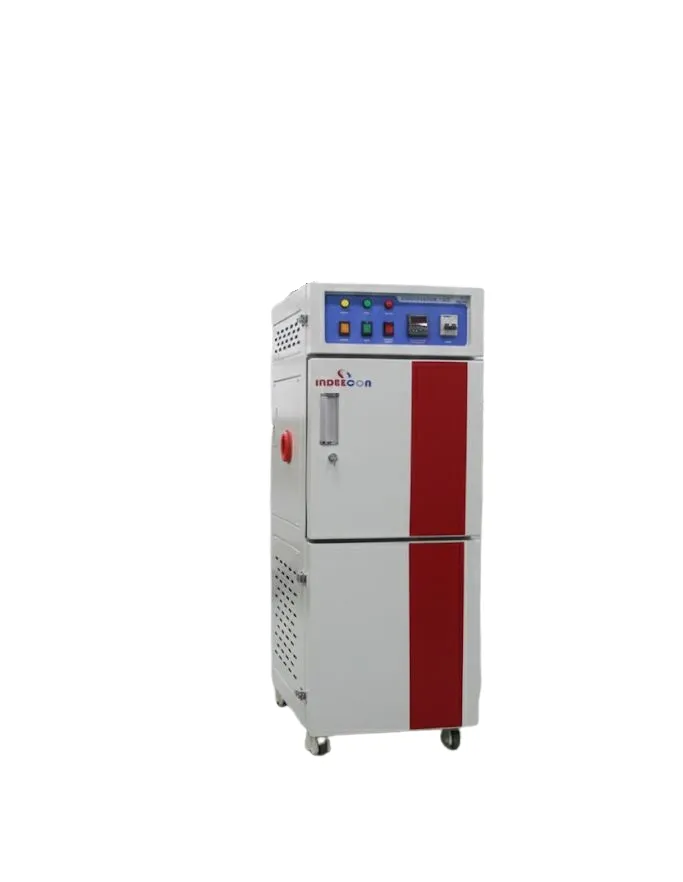
27L Vertical Temp & Humidity Calibrator 10°C to 60°C. Capacity: 27 Liters. Ideal for Pharmaceutical. Get a quote.
Key Specifications
- Temperature range: 10°C to 60°C
- Capacity: 27 Liters
- Vertical/Upright space-saving design
- Stable temperature control for sensor qualification
- Ideal for laboratory and benchtop use
Key Features
- 27L capacity in a vertical form factor (70 cm height × 45 cm width × 40 cm depth)
- Temperature range: 10–50°C with ±0.5°C uniformity across the chamber
- Humidity range: 30–95% RH with ±3% RH precision
- Dual dew-point control maintains temperature-humidity relationship (±0.5°C dew point)
- Flexible internal shelving supports simultaneous validation of 6–12 sensors
- PLC-based control with Ethernet interface for remote monitoring and data export
- Rapid stabilization: reaches setpoint within 30–45 minutes from cold start
- Stainless steel interior for cleanroom-compatible operation and easy decontamination
- NABL-accredited calibration certificates and on-board SPC data logging
- Low-vibration compressor (<60 dB) enables operation near sensitive instrumentation
Compliance Standards
- ISO 17025:2017 calibration procedures for environmental chambers
- IEC 60068-2-30 humidity test methods
- ASTM E104 humidity calibration reference standards
Applications
- Pharmaceutical Cold-Chain Storage: Validation of temperature-humidity sensors in 2–8°C refrigerated storage and 15–25°C/45–75% RH controlled environments
- Food Quality Testing: Sensor calibration for controlled atmosphere storage, ripening rooms, and humidity-controlled warehouses
- Laboratory Equipment Qualification: Validation of environmental sensors in incubators, environmental chambers, and climate-controlled test benches
- Electronics Manufacturing: Humidity validation for reflow ovens, moisture-sensitive device storage, and electrostatic discharge (ESD) monitoring
- Research and Development: Multi-point calibration workflows for temperature-dependent bioassays, materials testing, and environmental simulation
- Indoor Air Quality Monitoring: Sensor validation for building automation systems and IAQ compliance programs
Safety Features
- High / Low temperature protection and alarms
- Overload protection for internal components
- Electrical safety protections as per industrial standards
Optional Features
- NABL traceable calibration certificate
- Data logging and report generation tools
- Custom shelving and multi-probe entry ports
- Alternative temperature ranges on request
How It Works
- Place the sensors or test items in the vertical chamber
- Select the required temperature on the digital controller
- The system stabilises to create a uniform environment
- Perform calibration or validation as per required duration
- The compact design allows for easy setup on any laboratory bench
Datasheets & Resources
- Capacity
- Orientation
- Temperature Range
- Power Supply
Frequently Asked Questions
Why is humidity control as important as temperature in calibration?
Many environmental sensors (thermohygrometers, dew-point probes) measure both parameters. Temperature and humidity are interdependent—at a given temperature, 80% RH feels very different from 40% RH. Validating both simultaneously ensures accuracy for applications like pharmaceutical storage, food ripening, and data center monitoring.
How does the dew-point control function work?
Dew-point control automatically adjusts humidity based on temperature setpoint to maintain a precise dew-point value. For example, at 20°C, 50% RH equals a dew point of ~9°C. The system maintains that relationship, ensuring sensors experience realistic humidity-temperature coupling.
Can I use this for pharmaceutical stability testing?
Yes. Pharmaceutical stability studies per ICH Q1F require 25°C/60% RH, 30°C/75% RH, and 40°C/75% RH conditions. The 27L chamber's ±0.5°C and ±3% RH accuracy meets these specifications for accelerated stability testing.
How long does a typical multi-point humidity calibration cycle take?
A 5-point cycle (3 temperature setpoints × 2 humidity levels each) with 20-minute stabilization at each point takes 2.5–3 hours. Internal shelf design allows simultaneous validation of 6–12 sensors, making this efficient for production QA workflows.
What maintenance does the humidity system require?
Drain accumulated condensate every 1–2 weeks depending on cycle frequency. Saturated salt solutions (if manual humidity calibration is used) should be refreshed monthly. Automatic humidity generation systems (newer models) require distilled water top-up weekly and filter replacement every 6 months.
Related Guides
Continue your evaluation with the most relevant master pages, comparison guides, and technical resources for this product family.
- Calibration Equipment Guide — Dry block calibrators and liquid baths — equipment families, temperature ranges, and selection factors.
- Temperature Calibration Guide — Traceability, uncertainty, and temperature calibration fundamentals.
- Calibration Selection Guide — Select equipment by range, stability, and application constraints.
- Portable vs Lab Calibration — When field calibration wins and when bench setups make more sense.