Precision Tabletop Air Velocity Calibrator
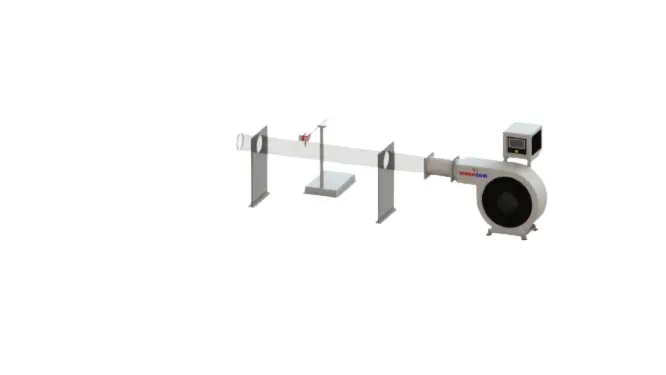
Precision Tabletop Air Velocity Calibrator Air velocity and airflow calibration. Repeatable performance for verification workflows. Ideal for Cleanroom.
Key Specifications
- Designed for air velocity and airflow calibration
- Repeatable performance for verification workflows
- Suitable for anemometers and airflow sensors
- Stable test conditions for accurate calibration
- Built for lab and industrial use
Key Features
- Measurement range: 0.1–5 m/s covering typical fume hood and biosafety cabinet specifications
- Digital display with averaging algorithm reduces turbulence-induced noise
- Dual-sensor option: thermal anemometer for quick readings, pressure-based for precision audits
- NABL-traceable calibration against primary standards for audit compliance
- Portable design fits handheld operation while recording 10+ point averages
- Data logging stores facility baseline velocity maps for trend analysis
- Stainless steel probe resists corrosion from fume hood chemical residue
- USB export enables facility compliance reporting and SOP documentation
- IP54 sealed construction withstands humid cleanroom and laboratory environments
- Integrated alarm flags if measured velocity falls below specification threshold
Compliance Standards
- ISO 14644 cleanroom classification and air velocity specifications
- NSF/ANSI 49 biosafety cabinet performance and airflow verification
- ANSI/ASHRAE 110 fume hood containment and face velocity testing
- ISO 17025:2017 portable airflow measurement procedures
Applications
- Cleanroom Certification and Compliance: Annual validation of room air changes and velocity at doorways and work surfaces
- Biosafety Cabinet Qualification: Verification of critical velocity (0.5 m/s inward) for personnel and product protection
- Fume Hood Performance Audits: Routine assessment of hood face velocity to detect ductwork blockages and fan degradation
- Laboratory Ventilation Commissioning: Post-installation airflow mapping to confirm HVAC design specifications
- Contamination Failure Investigation: Diagnostic airflow testing to determine if product contamination resulted from inadequate ventilation
- Pharmaceutical Manufacturing Compliance: Quarterly air velocity monitoring for ISO Class 6–8 cleanroom documentation
Safety Features
- Electrical safety protections for blower and controls
- Stable operating design for safe calibration handling
Optional Features
- Custom fixtures and mounting adapters for instruments
- Data logging and calibration reporting support
- Reference standard integration (as per requirement)
How It Works
- Mount the velocity instrument or sensor in the test section
- Set the required airflow/velocity condition
- Allow stabilisation of velocity profile
- Compare instrument readings against reference standard
- Record results for calibration and compliance documentation
Frequently Asked Questions
Why is air velocity critical for fume hoods and biosafety cabinets?
Airflow velocity creates a thermal and pressure barrier that contains chemical vapors (fume hoods) or biological aerosols (biosafety cabinets). If velocity falls below ~0.4 m/s, containment fails and hazardous materials escape into the lab. Annual velocity validation is an OSHA requirement for fume hoods and an NSF mandate for biosafety cabinets.
How often should I check air velocity?
ANSI/ASHRAE 110 recommends annual certification for fume hoods. Biosafety cabinets (NSF/ANSI 49) require certification every 12 months or after relocation. High-traffic labs may audit quarterly to catch blockages early.
What's the difference between thermal anemometer and pressure-based methods?
Thermal anemometers are quick and portable—ideal for routine audits. Pressure-based (pitot tube) methods are slower but more accurate for regulatory audits. Indeecon's dual-sensor option lets you choose speed vs. precision based on audit purpose.
Can this validate other cleanroom airflow parameters?
Yes. You can use this to measure air changes per hour (ACH) if you know room volume, or to map velocity profiles across multiple doorways. For comprehensive cleanroom commissioning, Indeecon also supplies particle counters and pressure differential tools.
Is NABL certification mandatory for my facility?
If your facility undergoes third-party accreditation (ISO 17025 lab, GMP pharmaceutical, NSF biosafety cabinet cert), NABL is strongly recommended or required. For internal audits, in-house calibration standards may suffice. Check your accreditation body's requirements.
Related Guides
Continue your evaluation with the most relevant master pages, comparison guides, and technical resources for this product family.
- Calibration Equipment Guide — Dry block calibrators and liquid baths — equipment families, temperature ranges, and selection factors.
- Temperature Calibration Guide — Traceability, uncertainty, and temperature calibration fundamentals.
- Calibration Selection Guide — Select equipment by range, stability, and application constraints.
- Industrial Calibration Process — How calibration fits into validation, auditability, and QA systems.