Negative Dry Block Temperature Calibrator
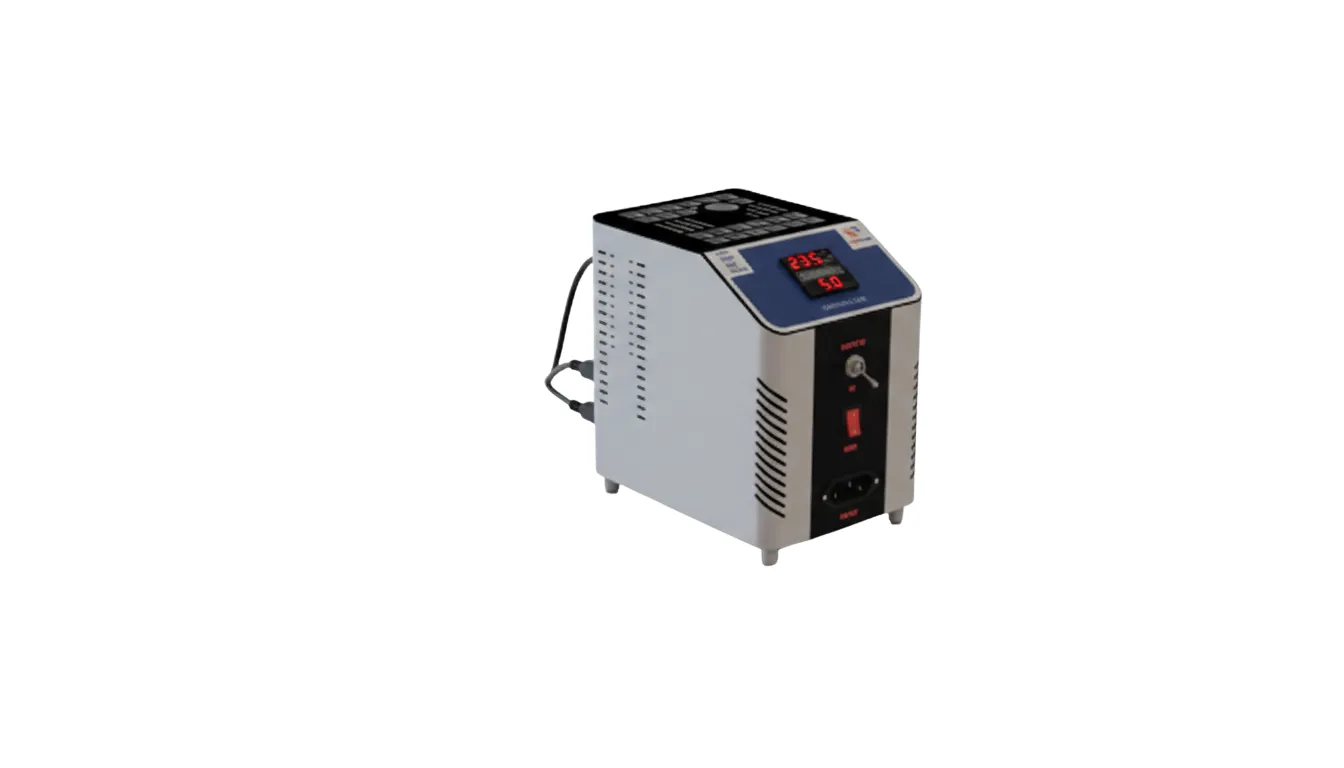
Negative Dry Block Temperature Calibrator Ambient to -100°C. High temperature options up to 1150°C. Ideal for Cold-chain logistics. Get a quote.
A dry block calibrator is a portable temperature measurement instrument used to calibrate thermocouples, RTDs, and temperature sensors across industrial ranges. Unlike liquid calibration baths, dry blocks use heated/cooled metal blocks for rapid, precise calibration from ambient to 1200°C, making them ideal for field work, process validation, and aerospace compliance (AMS2750G).
Key Specifications
- Temperature options: Ambient to -100°C (low temp models)
- High temperature options up to 1150°C (model dependent)
- Dry block calibration for clean, efficient operation
- Suitable for RTD and thermocouple calibration
- Custom inserts available for different probe sizes
Key Features
- Temperature range: Ambient to -40°C with ±0.05°C stability and uniformity
- Rapid cool-down: reaches -40°C from ambient in 30–40 minutes
- Aluminum dry block body with multiple interchangeable well inserts (4, 6, 8 mm bores)
- PLC-based temperature control with audible/visual high-low temperature alarms
- USB data logging captures temperature profiles and calibration results for compliance documentation
- Portable benchtop design: 8 kg weight, integral handle enables field deployment
- NABL-accredited calibration support with on-board result printing
- Non-liquid operation eliminates cryogenic fluid hazards and spill cleanup
- Thermocouple, RTD, and thermistor probe compatibility via interchangeable adapters
- Battery-backup UPS module (optional) ensures uninterrupted calibration during site power transitions
Compliance Standards
- ISO 17025:2017 portable calibration procedures
- WHO cold-chain specifications for vaccine storage validation
- ICH Q1F pharmaceutical stability testing environment requirements
Applications
- Cold-Chain Logistics Validation: On-site calibration of temperature data loggers in refrigerated trucks and maritime containers
- Pharmaceutical Storage Monitoring: Verification of freezer and ultra-low temperature sensors in clinical storage facilities
- Vaccine Distribution: Cold-chain sensor validation per WHO specifications at distribution hubs and final-mile delivery locations
- Food Safety Cold-Storage: Calibration of walk-in freezer and refrigerator temperature sensors in food manufacturing and distribution
- Laboratory Equipment Qualification: Validation of sensors in -20°C freezers, ultra-low freezers, and cryogenic incubators
- Research Sample Preservation: Cryogenic calibration of sensors controlling biobank storage temperatures
Safety Features
- Over-temperature protection and controller safety limits
- Thermal insulation and safe handling design
- Electrical safety protections for heating system
Optional Features
- Custom inserts and probe holders
- Reference probe integration support
- Data logging and documentation support
- High-temperature handling accessories (as required)
How It Works
- Select the temperature setpoint on the calibrator controller
- Allow the dry block to stabilise at the setpoint
- Insert the sensor/probe into the correct insert hole
- Compare readings against a reference standard
- Record results for calibration traceability and reporting
Datasheets & Resources
- Low Temperature Model
- Mid Temperature Models
- High Temperature Model
Frequently Asked Questions
Why do I need this if I have a -20°C freezer? Can't I just use that?
Freezers aren't calibrated for temperature measurement accuracy—they only maintain approximate setpoints. A sensor reading 'accurate' to ±2°C in a freezer could be off by ±2–3°C, unacceptable for vaccine or pharmaceutical storage validation. This portable calibrator delivers ±0.05°C traceability, meeting WHO and ICH standards.
How much faster is this than a liquid bath at -40°C?
Dry blocks cool ~2–3× faster than liquid baths because there's no fluid inertia. You reach -40°C in 30–40 minutes vs. 90–120 minutes for liquid. In field calibration scenarios, this speed advantage means you can validate 3–4 data loggers per hour instead of 1–2.
Can I transport this on an airplane for field work?
Yes. The dry block has no hazardous fluids, so it qualifies as carry-on or checked luggage. Battery UPS module is lithium-ion rated for air transport. Check with your airline for specific battery documentation requirements.
What certifications does NABL accreditation provide?
NABL certification means your calibration data meets ISO 17025 standards—acceptable for GxP pharmaceutical audits, FDA inspections, and vendor qualification. It's the gold standard for cold-chain compliance documentation.
Can multiple different probe types be validated simultaneously?
Yes. The dry block features three separate wells (4, 6, 8 mm). You can insert a thermocouple in one, an RTD in another, and a thermistor in the third—validating three different sensor types in one 30-minute cycle. This accelerates equipment qualification workflows.
Related Guides
Continue your evaluation with the most relevant master pages, comparison guides, and technical resources for this product family.
- Calibration Equipment Guide — Dry block calibrators and liquid baths — equipment families, temperature ranges, and selection factors.
- Temperature Calibration Guide — Traceability, uncertainty, and temperature calibration fundamentals.
- Calibration Selection Guide — Select equipment by range, stability, and application constraints.
- Dry Block vs Liquid Bath — Compare portability, accuracy, immersion, and temperature coverage.