Industrial Dry Bath Calibrator (100°C - 1000°C)
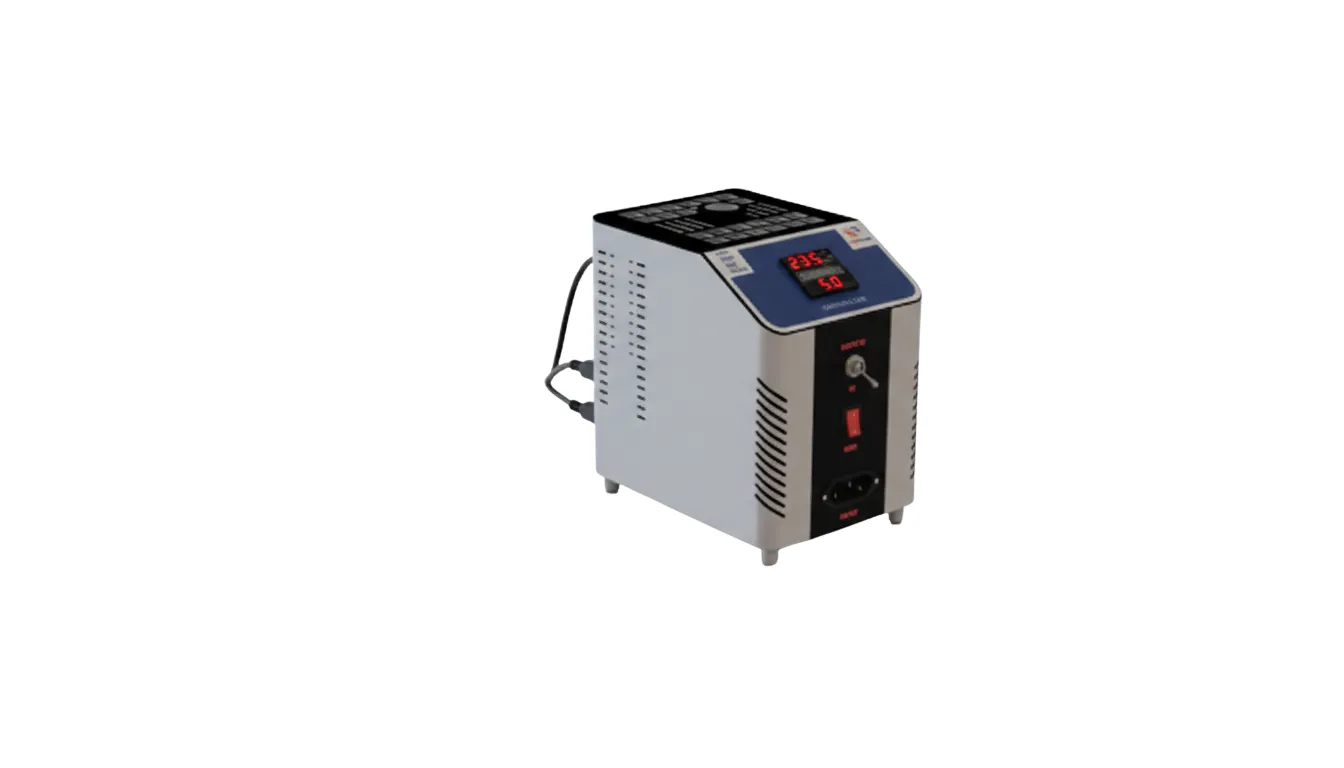
Industrial Dry Bath Calibrator (100°C - 1000°C) 100°C to 1000°C. High-capacity thermal block. Ideal for Aerospace. Get a quote.
A dry block calibrator is a portable temperature measurement instrument used to calibrate thermocouples, RTDs, and temperature sensors across industrial ranges. Unlike liquid calibration baths, dry blocks use heated/cooled metal blocks for rapid, precise calibration from ambient to 1200°C, making them ideal for field work, process validation, and aerospace compliance (AMS2750G).
Key Specifications
- Temperature: 100°C to 1000°C
- High-capacity thermal block
- Ceramic insulation for maximum efficiency
- Precision control for high-temp stability
- Suitable for long-length probes
Key Features
- Extended temperature range: 100–1000°C with ±1°C accuracy across full span
- AMS 2750G aerospace specification compliance for thermocouple validation
- Rapid stabilization: reaches 900°C from ambient in <60 minutes
- Stainless steel dry block body with ceramic insert for chemical inertness at extreme temperatures
- Multiple well configurations (4, 6, 8, 10 mm) accommodate thermocouples and RTD probes
- Integrated thermocouple reference junction eliminates cold-junction errors
- Dual PID control loops maintain temperature within ±0.5°C of setpoint
- High-temperature insulated casing keeps exterior surface <70°C despite 1000°C block temperature
- NABL-accredited calibration certificates with aerospace industry acceptance
- USB data logging exports complete thermal profiles for batch documentation and SPC
Applications
- Aerospace Thermocouple Qualification: AMS 2750G-compliant validation of aircraft engine and avionics temperature sensors
- Automotive Heat-Treat: Furnace thermocouple calibration for engine block, transmission, and suspension heat-treat processes
- Industrial Metallurgy: Thermal analysis and material testing equipment thermocouple validation
- Ceramic and Refractory Testing: High-temperature measurement of kiln sensors and thermal monitoring systems
- Electronics Manufacturing: Thermocouple validation for reflow ovens, diffusion furnaces, and semiconductor processing
- Research and Development: Thermal measurement traceability for materials research and process development studies
Safety Features
- Double-wall insulation for outer shell safety
- Emergency stop and limit controls
- Earth leak protection
How It Works
- Pre-heat block to the required high point
- Insert high-temp thermocouple into the block
- Compare with a certified reference standard
- Verify accuracy across multiple points
- Allow controlled cooling phase
Datasheets & Resources
- Temperature Range
- Stability / Uniformity
Frequently Asked Questions
Why is AMS 2750G compliance important?
AMS 2750G is the aerospace industry's mandated standard for thermocouple calibration and furnace temperature monitoring. Without AMS 2750G-accredited calibration, aerospace furnaces and heat-treat processes fail qualification audits. Indeecon's 1000°C calibrator meets this standard, enabling OEM suppliers to maintain aerospace certifications.
Can I validate both old (Type K) and new (Type N) thermocouples?
Yes. The integrated reference junction supports all standard thermocouple types (Type K, J, T, E, R, S, B, N). Different types have different accuracy ratings at 1000°C, but all can be validated in this single instrument.
How hot does the exterior get?
The insulated casing keeps the exterior surface <70°C even while the internal block operates at 1000°C. This is crucial for laboratory safety and allows nearby bench operation without special ventilation.
What's the cost to reach 1000°C every day?
Reaching 1000°C consumes ~5 kWh of electricity. At $0.12/kWh, that's ~$0.60 per heat-up cycle. For a typical aerospace supplier validating 5–10 furnaces daily, expect $3–6/day in electricity. High-temperature calibration is energy-intensive but necessary.
Do I need to hire an aerospace-certified technician to use this?
Not necessarily. Technicians need AMS 2750G training to understand thermocouple types, reference junctions, and calibration procedures. Indeecon provides training materials and certification support. For production use, on-site training by Indeecon staff is recommended.
Related Guides
Continue your evaluation with the most relevant master pages, comparison guides, and technical resources for this product family.
- Calibration Equipment Guide — Dry block calibrators and liquid baths — equipment families, temperature ranges, and selection factors.
- Temperature Calibration Guide — Traceability, uncertainty, and temperature calibration fundamentals.
- Calibration Selection Guide — Select equipment by range, stability, and application constraints.
- Dry Block vs Liquid Bath — Compare portability, accuracy, immersion, and temperature coverage.