High-Temp Dry Block Calibrator (250°C-1200°C)
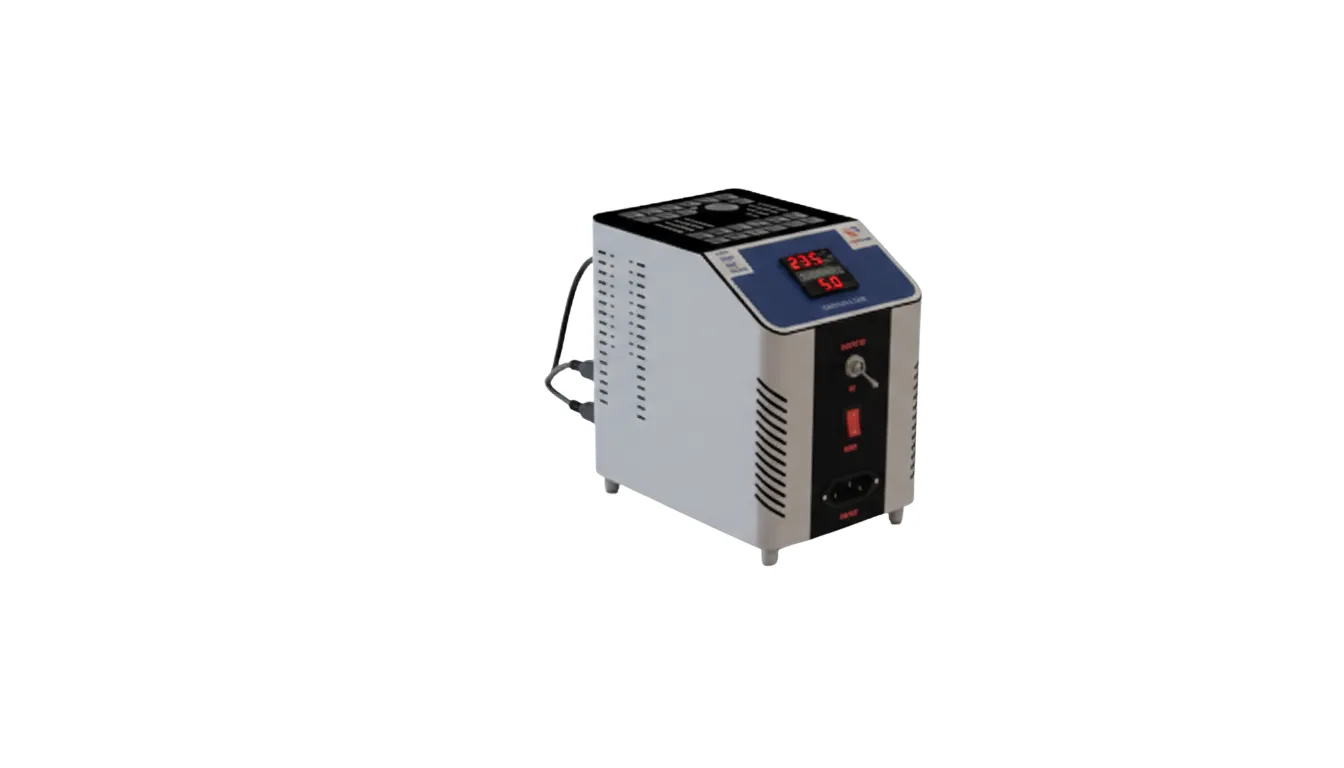
High-Temp Dry Block Calibrator (250°C-1200°C) 250°C to 1200°C. Exceptional stability at extreme heat. Ideal for Materials science. Get a quote.
A dry block calibrator is a portable temperature measurement instrument used to calibrate thermocouples, RTDs, and temperature sensors across industrial ranges. Unlike liquid calibration baths, dry blocks use heated/cooled metal blocks for rapid, precise calibration from ambient to 1200°C, making them ideal for field work, process validation, and aerospace compliance (AMS2750G).
Key Specifications
- Temperature: 250°C to 1200°C
- Exceptional stability at extreme heat
- Pre-stabilized ceramic block
- Microprocessor control for precision
- Ideal for primary calibration labs
Key Features
- Ultra-high temperature range: 100–1200°C with ±1.5°C measurement accuracy
- Purpose-built for materials research and extreme-heat process validation
- Advanced ceramic composite dry block resists thermal cycling and chemical attack at 1200°C
- Tungsten heating elements provide stable, uniform temperature distribution
- Rapid stabilization: reaches 1100°C from ambient in ~90 minutes
- Integrated thermocouple reference junction eliminates cold-junction compensat ion errors
- Dual PID control maintains temperature within ±0.8°C of setpoint at extreme temperatures
- Heavy-duty insulated housing contains thermal radiation while keeping exterior surface <80°C
- Multiple interchangeable ceramics-lined well inserts (4, 6, 8 mm bores)
- USB and Ethernet data logging with full thermal profile export for research publication and compliance
Applications
- Materials Science Research: Thermocouple validation for differential scanning calorimetry, thermogravimetric analysis, and thermal property measurement
- Specialty Alloy Development: High-temperature measurement verification during superalloy and refractory material characterization
- Ceramic and Refractories Testing: Kiln thermocouple calibration and thermal property validation for advanced ceramic matrices
- Crystal Growth and Epitaxy: Temperature measurement in Czochralski pullers, flux growth, and vapor-phase epitaxy furnaces
- Advanced Manufacturing R&D: Thermal process validation for additive manufacturing, spark plasma sintering, and advanced sintering techniques
- University Research and Academic Institutions: Materials characterization and thermal analysis support for graduate research programs
Safety Features
- Internal fan cooling for electronics
- Heater burnout detection
- Independent safety controller
How It Works
- Stabilize unit at target high-heat point
- Carefully insert high-temp probes
- Log stable data over 15-20 minute soak
- Compare with secondary or primary standard
- Perform safe cooldown cycle
Datasheets & Resources
- Temperature Range
- Stability / Uniformity
Frequently Asked Questions
When would I need 1200°C vs. the 1000°C model?
1200°C is required for specialty materials (superalloys, refractory ceramics, advanced composites) where processing temperatures exceed 1000°C. Typical industrial heat-treat uses 900–1000°C; advanced R&D and materials science use 1100–1200°C.
Is the accuracy really ±1.5°C at 1200°C?
Yes. At 1200°C, ±1.5°C represents ~0.1% relative accuracy—remarkable for such extreme temperatures. For research-grade measurements, this is considered excellent. Industrial furnaces operate with ±10–20°C tolerance, so ±1.5°C is more than adequate.
What's the thermal lifespan of the ceramic block?
Ceramic composite blocks are rated for ~2,000–3,000 thermal cycles (ambient to 1200°C and back). Expect 3–5 years of typical research use before needing replacement. Indeecon offers replacement block kits for extended instrument life.
Can I use this for commercial furnace calibration?
Technically yes, but it's overkill. For commercial heat-treat (100–1000°C), the 1000°C industrial model is more cost-effective. The 1200°C model is designed for materials research where extreme-temperature precision justifies the premium.
How do I document results for publication?
USB export generates detailed CSV files with timestamp, setpoint, actual temperature, and measurement uncertainty. Indeecon provides a template NABL certificate that you can customize for your research context. Data is suitable for peer-review publication.
Related Guides
Continue your evaluation with the most relevant master pages, comparison guides, and technical resources for this product family.
- Calibration Equipment Guide — Dry block calibrators and liquid baths — equipment families, temperature ranges, and selection factors.
- Temperature Calibration Guide — Traceability, uncertainty, and temperature calibration fundamentals.
- Calibration Selection Guide — Select equipment by range, stability, and application constraints.
- Dry Block vs Liquid Bath — Compare portability, accuracy, immersion, and temperature coverage.