Portable Dry Block Calibrator (650°C) | Temperature Calibrator
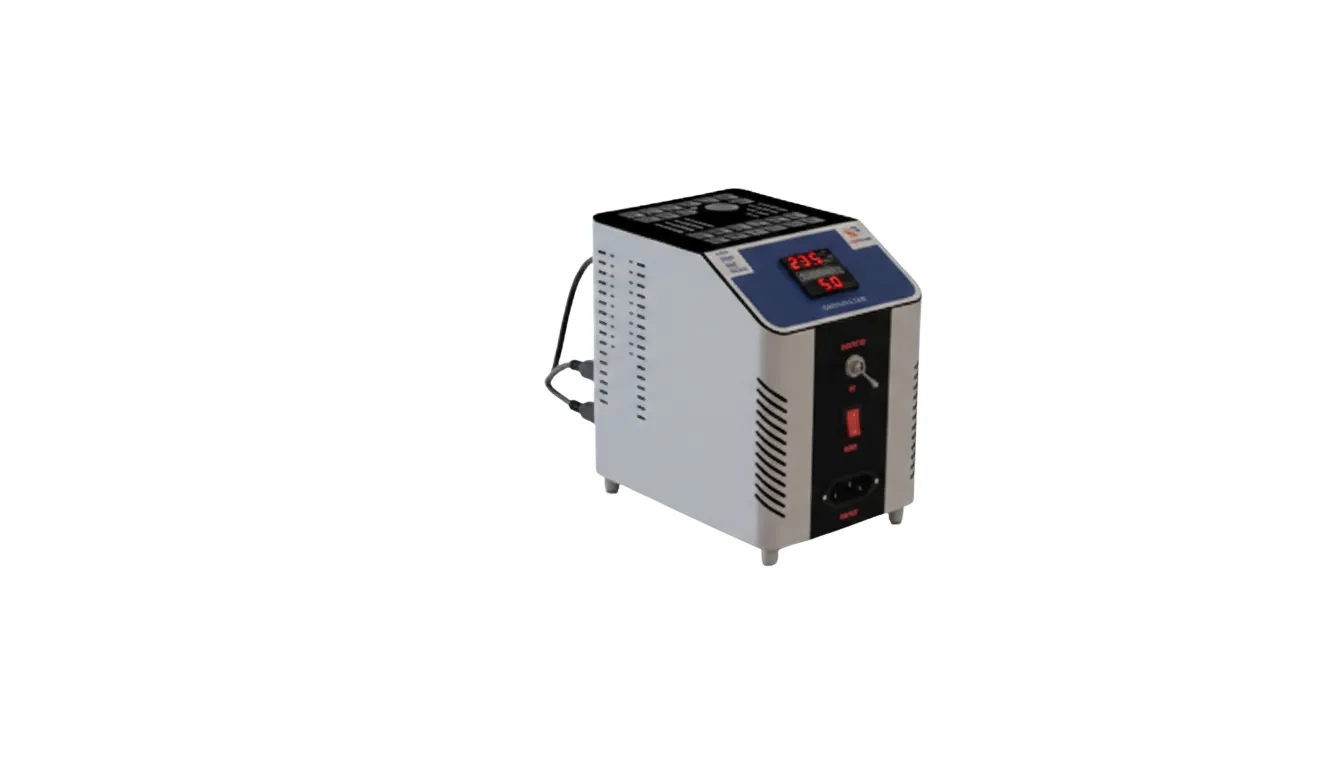
Indeecon's Portable Dry Block Calibrator is a high-precision temperature calibrator designed for fast and accurate calibration of thermocouples, RTDs, and temperature sensors. With an operating range of 50°C to 650°C, its lightweight design makes it ideal for laboratories, industrial maintenance, process plants, and on-site calibration applications.
Portable Dry Block Calibrator
A portable dry block calibrator is a high-precision temperature calibrator designed for accurate calibration of thermocouples, RTDs, temperature switches, and sensors. Using a controlled metal block, it delivers stable and repeatable temperature conditions from 50°C to 650°C, making it ideal for laboratories, industrial maintenance, process plants, and field calibration.
Key Specifications
- Temperature range: 50°C to 650°C
- Lightweight and portable design for field use
- Fast heating and cooling for improved efficiency
- Digital PID control for stable temperature block
- Suitable for various sensor sizes and types
- Range: 50°C to 650°C
- Stability: ±0.08°C
- Uniformity: ±0.05°C
- Resolution: Digital PID Controller
Key Features
- Operating temperature range: 50°C to 650°C for industrial calibration applications.
- Portable weight: ~5 kg including battery pack for single-technician field deployment
- Dual heating blocks: lower block for cryogenic (-40°C), upper block for high temperature (up to 650°C)
- Rapid stabilization: 20 minutes to ±0.5°C setpoint at any temperature
- Handheld operation with integrated thermocouple display and data logging
- Multiple interchangeable well inserts (4, 6, 8, 10 mm) accommodate various probe geometries
- Rugged IP54 sealed housing withstands industrial workshop dust and thermal radiation
- NABL-accredited calibration support with on-board report printing
- Integrated battery: 8–10 hours continuous operation; optional power pack for extended shifts
- USB data export for on-site documentation and SPC integration
Why Choose a Portable Dry Block Calibrator?
A portable dry block calibrator provides a fast, clean, and reliable solution for temperature calibration without the need for liquid baths. Designed for both laboratory and field use, it delivers stable temperature control, excellent portability, and repeatable results for thermocouples, RTDs, and other temperature sensors. Its compact design, rapid heat-up time, and interchangeable inserts make it an efficient choice for industrial maintenance, process validation, and calibration laboratories.
Benefits
- Lightweight and portable for on-site calibration
- Fast heat-up and stabilisation for improved productivity
- Accurate calibration of thermocouples, RTDs, and temperature sensors
- Clean, oil-free operation with minimal maintenance
- Interchangeable inserts for different probe diameters
- Suitable for laboratory and industrial field applications
- Supports traceable calibration and quality compliance
Compliance Standards
- ISO 17025:2017 portable temperature measurement procedures
- ASTM E220 industrial platinum RTD calibration methods
- IEC 61010-1 laboratory equipment electrical safety for portable instruments
Applications
- Furnace and Heat-Treat Commissioning: On-site calibration of furnace temperature sensors and thermocouples during installation and commissioning.
- Foundry Operations: Field calibration of temperature sensors used in foundries, heat-treatment, and industrial furnaces.
- Ceramic and Glass Manufacturing: Calibration of kiln temperature sensors for consistent high-temperature production processes.
- Metallurgical Testing: Laboratory calibration of temperature measurement during material testing and thermal analysis
- Industrial Maintenace: On-site calibration of temperature sensors during preventive maintenance and equipment servicing.
- Process Validation: Temperature measurement traceability for heat-treat batch documentation and product certification
Safety Features
- High temperature safety protection
- Internal cooling fan for temperature management
- Electrical safety protections according to industrial standards
Optional Features
- Custom insert sizes for different probe diameters
- NABL traceable calibration certificate
- Carrying case for easy transit and protection
- External reference probe support
How It Works
- Select the appropriate insert for your sensor or probe
- Enter the target temperature setpoint on the controller
- The dry block heats or cools to the required temperature
- Insert the probe into the block for verification
- Compare the probe reading against the calibrator's stable display
Datasheets & Resources
- Temperature Range
- Stability / Uniformity
- Orientation
- Power Supply
Frequently Asked Questions
Can really carry this to a foundry and calibrate furnace thermocouples?
Yes. The dual-block design means you can validate both ambient-temperature reference sensors and high-temperature furnace probes in a single portable unit. Technicians appreciate not having to transport multiple baths or wait for lab turnaround.
What's the accuracy at 650°C?
±0.5°C at 650°C—remarkable for a portable instrument. NABL calibration ensures traceability. Industrial furnaces typically maintain ±5–10°C stability, so ±0.5°C measurement is more than sufficient to validate control thermocouple performance.
How long does it take to reach 650°C from ambient?
First heat-up from ambient to 650°C takes ~40–50 minutes. Subsequent temperature transitions are faster (20 minutes from setpoint to setpoint). Plan for 2–3 hours to validate all thermocouples on a typical furnace.
Is the handle heat-safe to touch at 650°C?
The exterior handle features thermal insulation; the block itself reaches 650°C but the handle stays <50°C. Always use caution, and avoid direct hand contact with the heated block when validating thermocouples at high temperatures.
What happens if I spill water on it?
IP54 sealing protects internal electronics from splashes, but direct water immersion isn't recommended. In a damp foundry environment, wipe-down with a dry cloth and store in a protective case between uses.
What is a dry block calibrator?
A dry block calibrator is a precision temperature calibration instrument that uses a heated metal block to verify the accuracy of thermocouples, RTDs, temperature sensors, and digital thermometers without using liquids.
What is a temperature calibrator used for?
A temperature calibrator is used to verify and calibrate temperature measuring instruments, ensuring accurate readings for industrial processes, laboratories, quality control, and maintenance applications.
Which temperature sensors can be calibrated?
This portable dry block calibrator is suitable for calibrating thermocouples, RTDs, PRTs, temperature probes, transmitters, and digital thermometers using interchangeable inserts.
Why choose a portable dry block calibrator over a liquid bath?
A portable dry block calibrator offers faster setup, clean operation, excellent portability, and minimal maintenance, making it ideal for field calibration and industrial maintenance.
Which industries use dry block calibrators?
Dry block calibrators are widely used in power plants, pharmaceutical manufacturing, foundries, heat treatment, aerospace, petrochemical, calibration laboratories, and process industries.
Does the calibrator support ISO/IEC 17025 calibration?
Yes. The calibrator supports traceable calibration workflows and is suitable for laboratories and industries following ISO/IEC 17025 quality requirements.
Related Guides
Continue your evaluation with the most relevant master pages, comparison guides, and technical resources for this product family.
- Calibration Equipment Guide — Dry block calibrators and liquid baths — equipment families, temperature ranges, and selection factors.
- Temperature Calibration Guide — Traceability, uncertainty, and temperature calibration fundamentals.
- Calibration Selection Guide — Select equipment by range, stability, and application constraints.
- Dry Block vs Liquid Bath — Compare portability, accuracy, immersion, and temperature coverage.