ASTM B117 Salt Spray Test Chamber
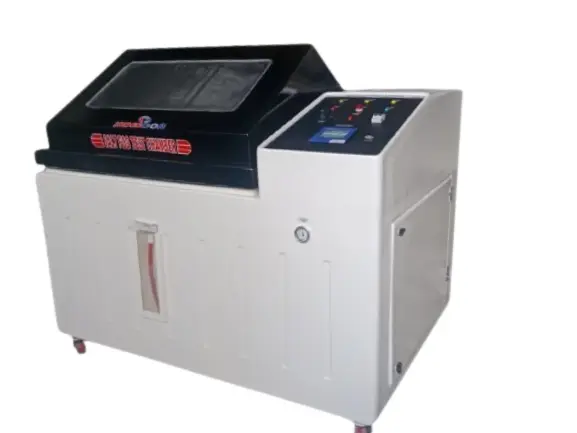
Indeecon's ASTM B117 Salt Spray Test Chamber is engineered for precise and repeatable corrosion testing of coated, painted, plated, and metal components. Designed to comply with ISO 9227 standards, this advanced salt spray tester creates controlled salt fog conditions to evaluate corrosion resistance, coating durability, and product reliability for automotive, aerospace, electronics, defence, and industrial applications.
What is a Salt Spray Test Chamber?
An ASTM B117 Salt Spray Test Chamber, also known as a salt spray tester, is used for accelerated corrosion testing of coated, plated, painted, and metallic components. Designed according to ASTM B117 and ISO 9227, it creates a controlled salt fog environment to evaluate corrosion resistance, coating durability, and product performance under simulated harsh conditions.
Technical Specification of our Salt Spray Test Chamber
- Accelerated corrosion testing with salt fog exposure
- Repeatable spray distribution for consistent results
- Designed for coatings and plated component evaluation
- Industrial-grade chamber construction
- Custom capacities and sample racks available
Key Features of Our ASTM B117 Salt Spray Test Chamber
- Maintains stable salt fog and temperature conditions for consistent test performance.
- Internal chamber volume: 250L supporting large assemblies and component groups
- Controlled salt fog spray: 1.0–2.0% NaCl concentration per ASTM specifications
- Temperature control: 35°C ±2°C for fog generation zone; 25°C ±5°C for sample area
- Built with corrosion-resistant materials for long-term laboratory use.
- Supports programmable test cycles and flexible control options.
- Humidity and temperature monitoring: integrated sensors with alarm system
- Includes multiple protection systems for safe and reliable operation.
- Integrated fog collection and drain system minimizes environmental hazard
- On-board data logging tracks fog duration, temperature, and environmental conditions for audit compliance
Why Choose a Salt Spray Test Chamber for Corrosion Testing?
Selecting the right testing equipment is essential for evaluating the long-term durability of metal components and protective coatings. A salt spray chamber accelerates the corrosion process by creating a controlled salt fog environment, allowing manufacturers to identify coating failures, compare material performance, and validate product quality in significantly less time than natural exposure testing. Designed to support internationally recognised standards such as ASTM B117 and ISO 9227, the chamber delivers repeatable and reliable test conditions across a wide range of industries. It helps manufacturers improve product reliability, reduce warranty claims, and meet customer and regulatory quality requirements.
Benefits
- Accelerates corrosion resistance evaluation
- Simulates harsh environmental conditions
- Supports quality control and product validation
- Reduces product development time
- Improves coating and material selection
- Delivers repeatable laboratory test results
Compliance Standards
- ASTM B117 standard salt spray (fog) apparatus and procedure
- ISO 9227:2012 salt spray corrosion testing of metals and coatings
- ISO 17025:2017 corrosion testing laboratory accreditation support
Industries We Serve
- Automotive Coating Validation: ASTM B117 testing of undercoating, paint, and plating on engine components, fasteners, and body panels
- Aerospace Fastener Qualification: Corrosion resistance testing of cadmium-plated, zinc-plated, and specialty coatings for aircraft structures
- Marine Hardware Testing: Accelerated corrosion evaluation of stainless steel and coated fasteners for shipboard and offshore applications
- Industrial Component Selection: Material and coating comparison for long-term corrosion resistance in acidic, salt-spray-laden environments
- OEM Supplier Qualification: Third-party corrosion testing to validate supplier component quality and coating performance
- Materials Research: Comparative testing of emerging corrosion-resistant materials and novel coating technologies
Safety Features
- Over-temperature protection and safety controller limits
- Low solution level protection (as applicable)
- Electrical safety protections for heaters and control systems
Optional Features
- Custom chamber capacities and sample rack configurations
- Data logging and reporting options
- Auto solution refill and monitoring features
- Remote monitoring and alarm outputs
How It Works
- Load samples onto racks inside the chamber
- Prepare salt solution as per test requirement
- Chamber generates controlled salt fog exposure
- Run test for specified duration with stable control
- Inspect samples and document corrosion performance
Frequently Asked Questions
What's the difference between ASTM B117 and other salt spray standards?
ASTM B117 is the U.S. automotive and aerospace standard. ISO 9227 is the international equivalent with minor protocol differences. Both deliver 5% salt spray (1.0–2.0% NaCl) at 35°C. Indeecon's chamber meets both standards, so you validate components for global markets.
How long does a typical test run?
Depends on coating type. Bare steel might show red rust in 24–48 hours; galvanized steel may run 500–1000 hours (weeks). For automotive coatings, 500-hour tests are standard; aerospace requires 1000+ hours. Plan for 2–6 week test cycles.
Can I test multiple parts simultaneously?
Yes. The 250L chamber accommodates 50–100 parts depending on size. Typical arrangement: fasteners on trays, engine components hung vertically, assemblies positioned at 15° angle. Indeecon customizes racks for your specific test plan.
Is NABL certification available?
Yes. Indeecon offers ISO 17025 accreditation support for salt spray testing. If your OEM customer requires third-party corrosion testing, Indeecon's accredited testing service can validate your coatings with formal reports.
What's the environmental impact of salt spray testing?
Salt fog is caustic and requires proper drainage and neutralization. Indeecon's integrated collection system drains salt solution to a waste container. The solution can be neutralized with alkaline rinse and disposed per local environmental regulations. Consult your environmental coordinator for your facility's waste handling protocols.
What is ASTM B117?
ASTM B117 is the internationally recognised standard that specifies the operating conditions and procedures for conducting neutral salt spray (fog) testing to evaluate the corrosion resistance of coated and metallic materials.
What is ISO 9227?
ISO 9227 is an international standard for corrosion testing using neutral salt spray (NSS), acetic acid salt spray (AASS), and copper-accelerated acetic acid salt spray (CASS) methods to assess protective coatings and materials.
What materials can be tested in a salt spray chamber?
Salt spray chambers are suitable for testing metals, plated components, painted surfaces, powder-coated products, fasteners, aluminium alloys, stainless steel, and other corrosion-resistant materials.
How long does a salt spray test typically last?
The duration depends on the applicable standard and product requirements. Tests may range from 24 hours to several hundred or even thousands of hours, depending on the required corrosion resistance.
Can the chamber perform different salt spray test methods?
Yes. Depending on the configuration, the chamber can support Neutral Salt Spray (NSS), Acetic Acid Salt Spray (AASS), and Copper-Accelerated Acetic Acid Salt Spray (CASS) testing in accordance with relevant standards.
Related Guides
Continue your evaluation with the most relevant master pages, comparison guides, and technical resources for this product family.
- Environmental Test Chamber Guide — Overview of chamber types, standards, and use-case fit.
- Environmental Chamber Selection Guide — Choose the right chamber by range, specimen size, and standard.
- Salt Spray Chamber Guide — Chamber types, test methods (NSS/CASS/AASS), and standards for corrosion qualification.
- ASTM B117 Technical Guide — Testing procedure, setup requirements, and compliance basics.